CareMetrics
Turn healthcare data into action for value-based care.
Track performance, identify risk, and prioritize interventions with clear analytics built for providers, payers, and care teams.
What We Offer
Trusted by care teams working to improve quality, reduce avoidable cost, and close gaps in care.
Performance dashboards
See quality measures, utilization trends, and cost drivers without digging through spreadsheets.
Risk and opportunity
Surface high-risk cohorts, care gaps, and preventable events so teams can act sooner.
Measure impact over time
Track interventions, outcomes, and savings with reporting aligned to value-based programs.
How It Work?
From raw healthcare data to clear, measurable action.

Our Core Features
User's Review
What stands out is the platform’s ability to support both population-level analysis and operational decision-making, which is essential for organizations seeking measurable improvements in quality and cost outcomes.
Tunde Adeyemi
Healthcare Policy Analyst
It has a practical analytics framework that aligns well with the realities of modern healthcare delivery. Its standardized metrics and longitudinal tracking capabilities enable consistent performance evaluation over time, supporting accountability and informed leadership decisions in value-based care programs.
Aisha Bello, MPH
Population Health Consultant
0
+
Data Insights
0
+
Clients Rating
0
K +
Money Saved
0
+
Data Processed
Frequently Asked Questions
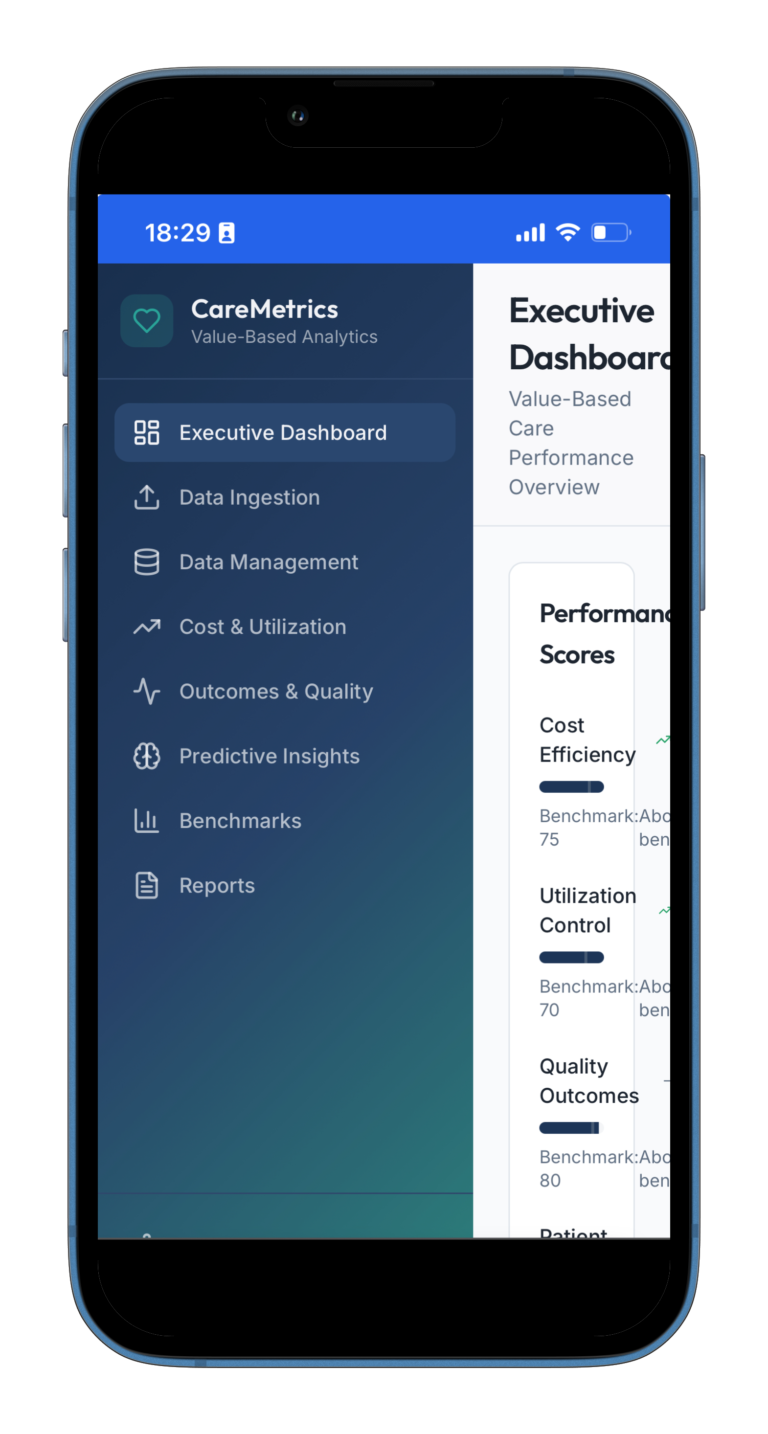
CareMetrics is a healthcare analytics platform designed to support the execution of value-based care. It is built for healthcare organizations, care management teams, analysts, and leadership stakeholders who need consistent performance visibility across quality, utilization, and cost.
CareMetrics provides a unified analytics layer that enables organizations to measure outcomes, identify risk, and track performance over time. By translating complex healthcare data into actionable insights, the platform supports informed decision-making and measurable improvement under value-based reimbursement models.
CareMetrics delivers population-level and patient-level insights, including performance trends, utilization patterns, care gaps, and risk stratification. These insights help organizations prioritize interventions, allocate resources effectively, and monitor the impact of care strategies.